How Many Porta Potties Do I Need for a Construction Site?
Start with OSHA 1926.51(c): 1 toilet facility for 20 workers or fewer, then 1 toilet seat and 1 urinal per 40 workers once you pass that threshold, and 1 seat plus 1 urinal per 50 workers at 200 or more. That table drives every jobsite calculation in Glendale, whether you are running a home addition or a commercial pour. A 15 person framing crew needs just 1 unit under the bracket. A 45 person crew crosses into the next bracket and needs 2. Multi-week jobs add wear, so pair unit count with a service schedule that matches your headcount, not just your unit count. If your crew works with paints, coatings or solvents, OSHA 1926.51(f)(1) requires washing facilities on top of toilets, so a handwashing station rental belongs on that site regardless of toilet count. General industry sites, as opposed to construction, fall under 1910.141(c)(1)(i) instead, which uses a different employee bracket. Worked example: a Glendale remodel crew of 28 sits in the 21-40 bracket, meaning 1 toilet seat and 1 urinal, typically delivered as 2 standard porta potty rental units to keep both fixtures covered without a shared line. Check current porta potty rental cost figures before you commit to unit count, since pricing shifts with rental length.
How Many Porta Potties Do I Need for an Event?
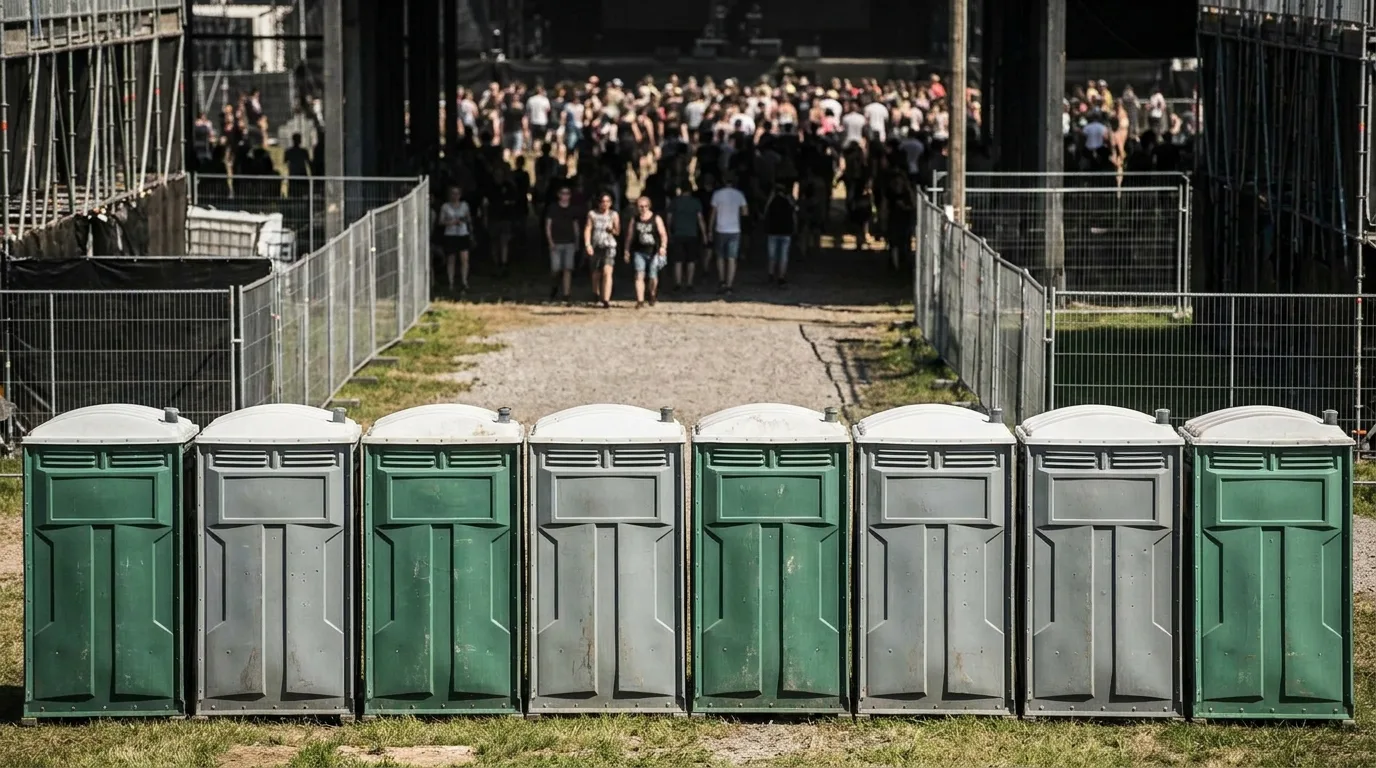
Event math runs on guest count and hours, not headcount brackets. A basic planning ratio is 1 unit per 50 guests for a 4 hour event; stretch the event past 6 hours or add alcohol and that ratio tightens fast, since bladders empty faster with beer in hand. A wedding of 150 guests over 5 hours typically needs 3 to 4 standard units, plus at least 1 ADA accessible porta potty per ADA Standards section 213.2, which requires 5 percent of clustered units to be accessible with a minimum of 1 regardless of total count. Multi-day festivals need units serviced daily, not once. Worked example: a 300 person concert running 6 hours with beer sales should plan for 8 to 10 units, split between standard porta potty rental and at least 1 accessible unit, with a same-day service pass built into the event restroom rental plan. Glendale event venues near Westgate and the stadium district draw big weekend crowds, and undercounting units there means lines that bleed into the next event slot.
What's the Toilet Ratio for Alcohol and Multi-Day Events?
Alcohol changes the math because it increases both frequency and urgency. Where a dry event runs 1 unit per 50 guests, an event serving alcohol should tighten to roughly 1 unit per 35 to 40 guests for the same hours, since drink service pushes people toward the restroom line more often. Multi-day events need a service visit built into every 24 hour block rather than relying on the ANSI/PSAI Z4.3 baseline of one visit per week for up to 10 users over a standard 40 hour week, which assumes steady jobsite use, not weekend-long event traffic. A 3 day fair with beer gardens should budget both more units and more frequent pumping than the same headcount at a single afternoon event. Glendale's county fair grounds and outdoor festival sites see this exact pattern every season: strong Friday crowds, heavier Saturday drinking, and units that need mid-event service to stay usable through Sunday. Planning for a county fair restrooms layout means building in that extra service pass up front rather than calling for an emergency pump-out mid-event through emergency porta potty rental.
How Many Cubic Feet Are in a 10 Yard Dumpster?
A 10 yard dumpster holds 10 cubic yards, which works out to 270 cubic feet, since each cubic yard equals 27 cubic feet. That's the smallest roll-off size most Glendale renters use, and it suits a single room cleanout or a small bathroom remodel. A 10 yard dumpster rental needs roughly 60 feet of straight clearance behind the truck for delivery, the same clearance every roll-off size requires regardless of container length. If your load is heavier than it looks, like tile or concrete debris, check dumpster weight limits before you fill it past the rim, since overage fees stack up fast on dense material.
How Many Cubic Feet Are in a 20 Yard Dumpster?
A 20 yard dumpster holds 20 cubic yards, or 540 cubic feet, roughly double the capacity of the 10 yard size. In terms of length, a 20 yard dumpster typically runs about 22 feet long, which is longer than most residential driveways can swallow without some planning around gates and overhangs. Weight-wise, a 20 yard container generally holds up to 4 tons of mixed debris before you hit typical weight caps, though dense material like shingles or brick fills the weight limit before it fills the box. A Glendale kitchen renovation or roof tear-off usually lands in this range. Compare sizes on the dumpster sizes and dimensions page before booking, and check the roll-off dumpster rental options for what's actually available on your delivery date.
How Many Tons Can a 30 Yard Dumpster Hold?
A 30 yard dumpster typically holds up to 5 to 6 tons of mixed construction debris, more than a 20 yard but with the same 60 foot delivery clearance requirement behind the truck. This size fits whole-house cleanouts, additions and larger remodel projects generating framing scrap, drywall and packaging waste. Housekeeping matters here too. OSHA 1926.25 requires scrap and debris to be cleared from work areas regularly, and a properly sized dumpster is what makes that possible without daily hauling. A 40 yard dumpster steps up again, typically holding 7 to 8 tons, and is common on Glendale commercial demolition sites where the volume outpaces what a 30 yard box can absorb in a single week. Both sizes require the same clearance behind the delivery truck, so measure your driveway or lot access before ordering either. Check dumpster rental cost and construction dumpster rental options once you know your size, and confirm what's excluded on the what cannot go in a dumpster page, since paint, batteries and certain chemicals never belong in a roll-off regardless of size.
Do I Need a Permit for Porta Potties or Dumpsters in Glendale?
Permit rules for placing units in the right of way, on a public street or on a construction easement need confirming directly with the city, since exact requirements vary by site and by whether the unit sits on private property or public space. Glendale's specific permit process is not something we'll guess at here. Before you place a unit anywhere near a sidewalk, curb or shared lot, check porta potty permit requirements and dumpster permit requirements, and confirm placement with the city directly. A porta potty placement guide can help you plan around obstacles like slope and access before permit questions even come up, but the permit itself is a city call, not a rental company call.
How many porta potties do I need for 100 guests?
For 100 guests at a 4 to 5 hour event, plan on 2 standard units plus 1 ADA accessible unit under ADA Standards 213.2. Add alcohol service and bump that to 3 standard units, since drink service increases bathroom trips across the whole guest list, not just for heavy drinkers.
How many porta potties does OSHA require for a 50 person crew?
A 50 person crew falls in the 41-50 bracket if you're near the top edge, but at exactly 50 you're still under the 1 per 40 threshold from 20-up, so OSHA 1926.51(c) calls for 2 toilet seats and 2 urinals. Most Glendale contractors round up rather than sit at the exact line.
How far in advance should I book portable toilets in Glendale?
Book standard jobsite units at least a week ahead for reliable delivery, and event units 2 to 3 weeks out for weekend dates, since Saturday demand runs heavy across Glendale's event venues. Rush orders through emergency porta potty rental work, but selection narrows fast on short notice.
Do I need an ADA unit if I only have a few accessible guests?
Yes. ADA Standards section 213.2 requires at least 1 accessible unit whenever units are clustered, regardless of how many guests you expect to need it. It's a flat minimum, not a percentage that rounds down to zero on small counts.
How many porta potties do I need for a 2 day event?
Plan the same per-hour ratio for each day, then add a mid-event service visit rather than assuming units carry over clean. A 2 day event with 200 guests per day typically needs 4 to 5 units serviced once between days, not just at teardown.
What is the difference between a standard unit and a deluxe unit for events?
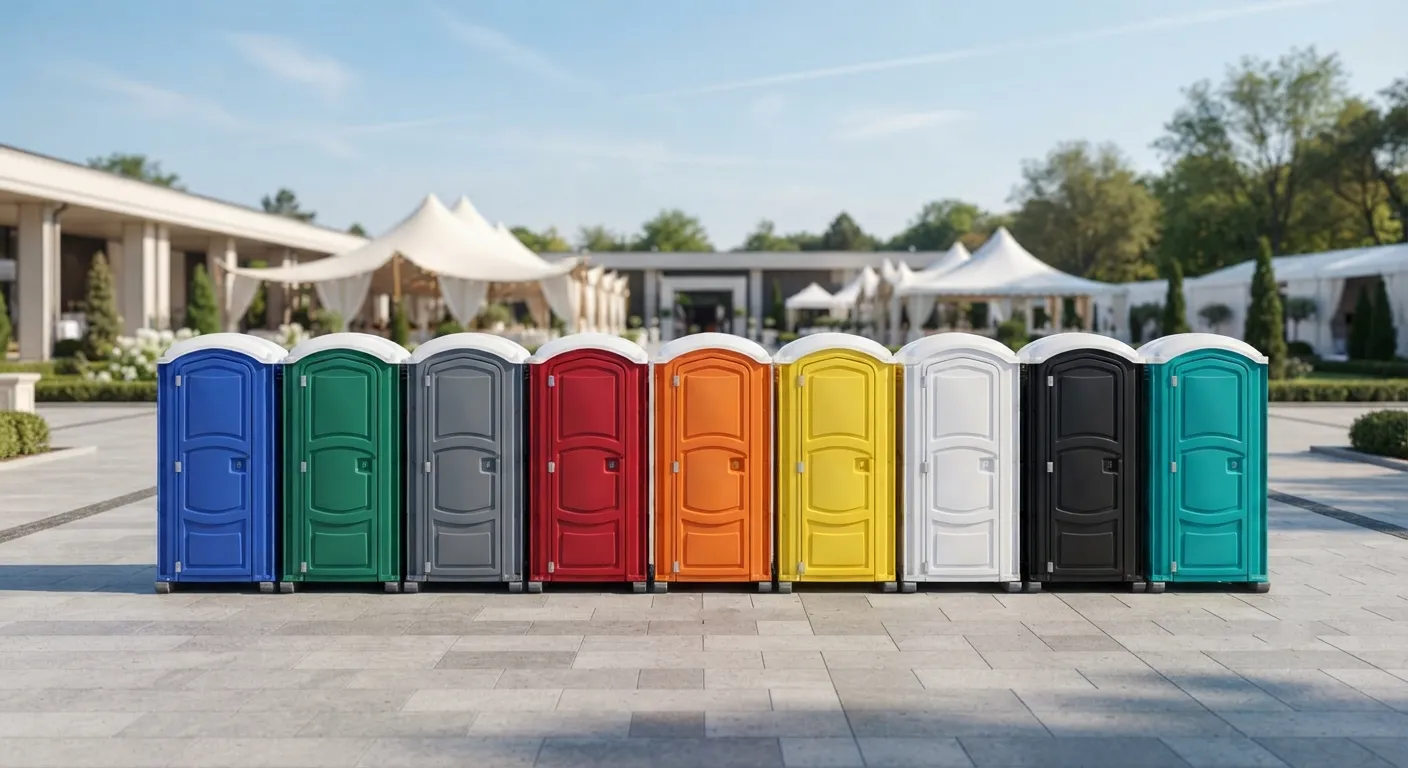
A standard porta potty rental covers basic function with a 60 to 70 gallon tank, while a deluxe flushable porta potty adds flush function and a nicer interior for weddings or corporate events where guest experience matters more than jobsite basics.
Next step
Get a delivery date
Tell us the address, the dates and the headcount. We size the order and confirm the route.