What does disaster relief sanitation actually include?
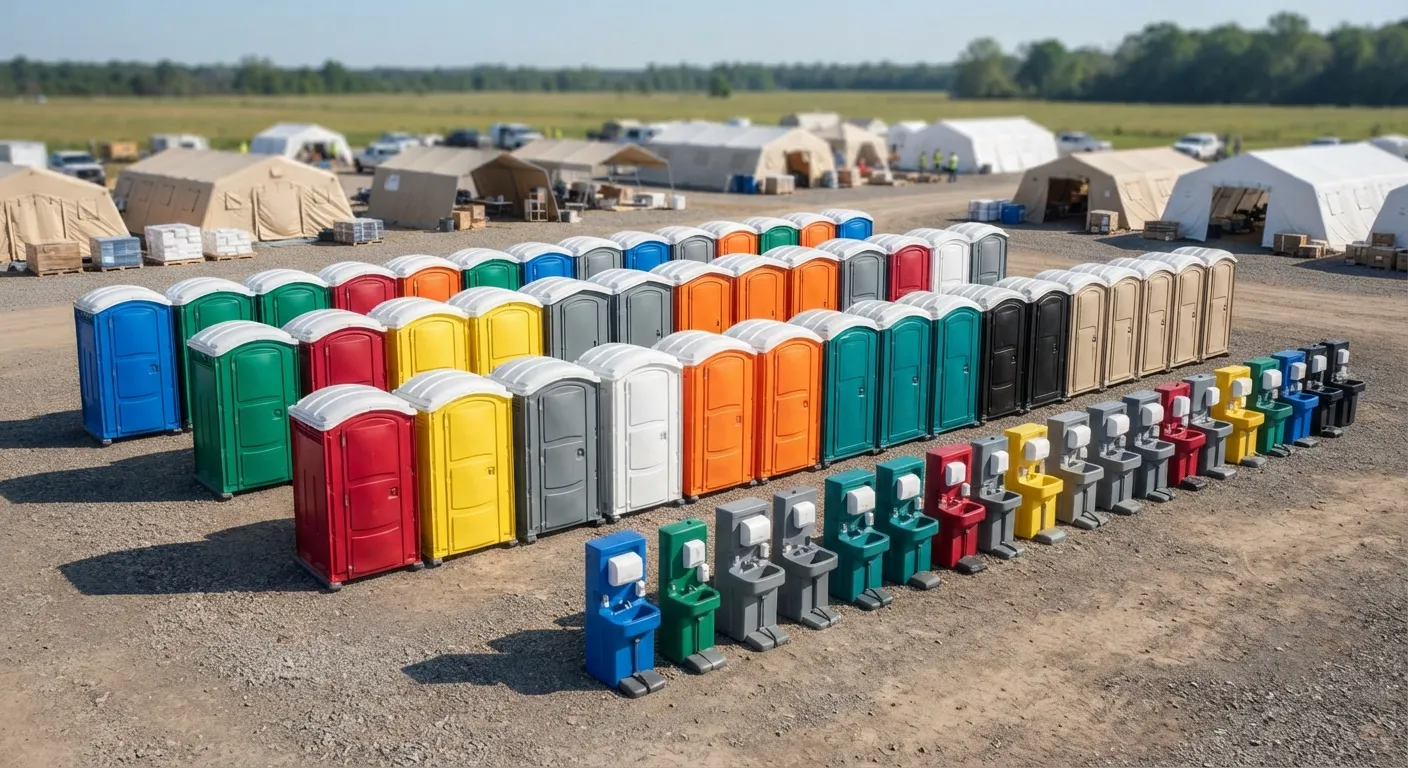
It is not just a toilet dropped at a curb. A real response covers portable toilet rental units, a holding tank rental for gray water where sewer lines are compromised, and handwashing station rental units built to the same standard as any construction site. Under 29 CFR 1910.141(d)(2), a working handwash setup needs soap and towels or a hand-drying device; sanitizer alone does not satisfy that. We also stage temporary fence rental around units when a site sits near debris piles or open utility work, and light towers when crews are still working after dark. For larger shelters run out of a school gym or church hall, an 8 stall restroom trailer or 4 stall restroom trailer covers more people per hour than scattered single units, and a shower trailer rental matters when residents are displaced for more than a couple of days. Every deployment gets logged for the county or Red Cross coordinator on-site, and units get serviced daily instead of the usual weekly interval, because a shelter population runs closer to the 40-hour-week baseline in ANSI/PSAI Z4.3 compressed into far fewer hours.
How fast can Glendale Porta Pros respond to an emergency?
Same-day placement is the standard for anything called in before early afternoon, and units can roll from our yard to a staging site in Glendale without the lead time a scheduled event needs. If the address sits closer to Sun City, 9.1 miles northwest, or Tolleson, 9.7 miles southwest, drive time barely changes our response window. We keep spare standard units, ADA units and a couple of holding tanks ready year-round for exactly this reason, separate from the stock committed to booked jobs like weddings or festivals. An emergency porta potty rental call gets a truck dispatched the same way an emergency septic service call does when a residential tank backs up during a storm. Coordinators managing a multi-block outage should call early: once a monsoon cell rolls through Glendale, request volume climbs fast and units get committed to the first agencies that call. We can also bring a mobile office trailer rental for command staff and a storage container rental for pallets of water and supplies, so sanitation is not the only piece we're solving for on-site.
Are the units ADA accessible for displaced residents who need them?
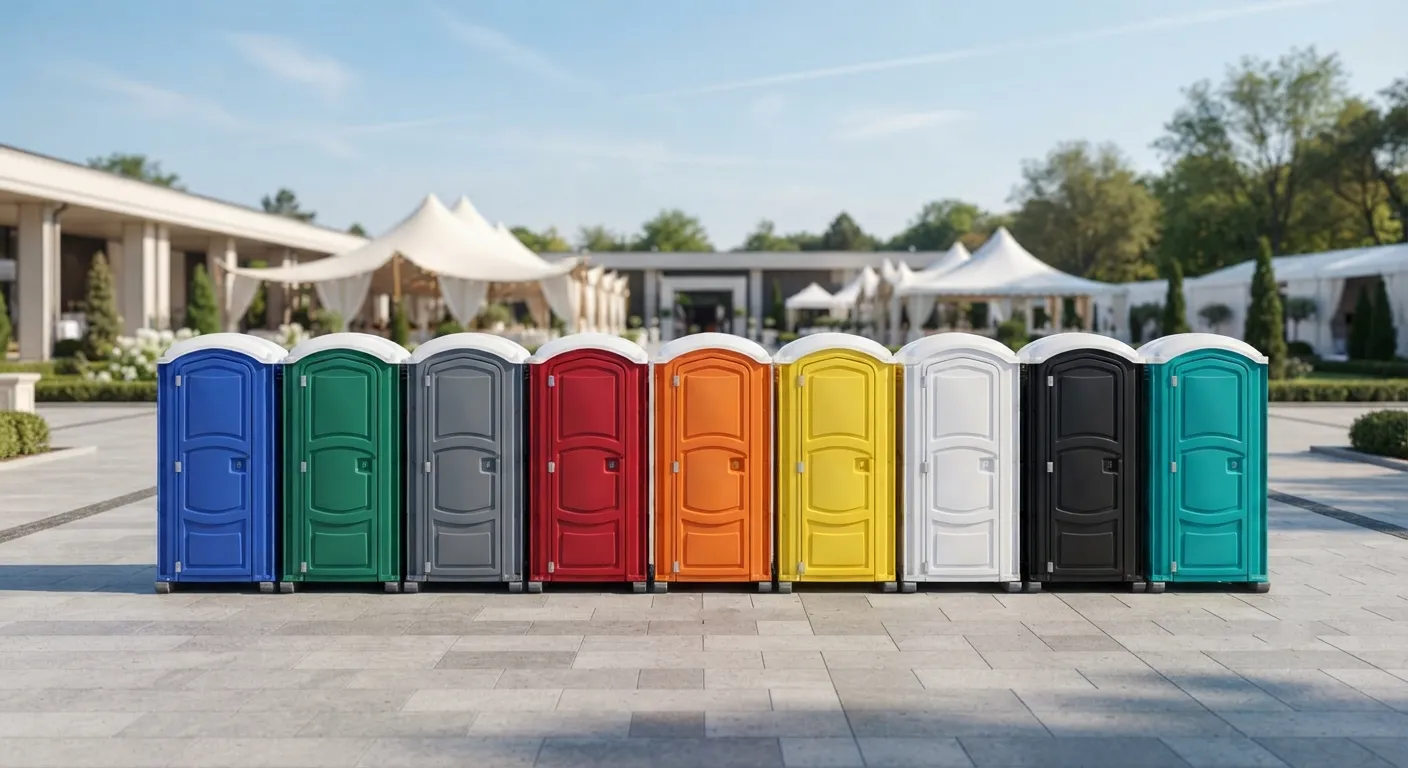
Yes, and that matters more in a shelter setting than almost anywhere else, because residents did not choose to be there and cannot always travel far to find an accessible unit. ADA Standards section 213.2 requires that at least 5 percent of clustered single-user units be accessible, with a minimum of one no matter how small the cluster. Our ADA accessible porta potty units meet the 36 inch clear route called for in ADA Standards 403.5.1 and the 60 inch turning circle in ADA Standards 304.3.1, both of which matter when someone is moving through gravel or a hastily graded lot rather than a paved lane. Door hardware follows ADA Standards 309.4, meaning no tight grasping or twisting is needed to get in. For larger shelter operations we recommend reading through ADA restroom requirements before the units arrive, so the site lead knows what ratio to request. Pricing for an ADA unit runs inside the same bands published on our ADA accessible porta potty page, and weekly rates are lower per day than single-day emergency calls, which matters once a shelter operation runs past 72 hours.
| unit | day | week | month |
|---|---|---|---|
| standard | 100-350 | 130-500 | 125-325 |
| ada | 200-400 | 120-240 | n/a |
| deluxe | 85-1200 | 150-290 | n/a |
How many units does a shelter of 100 people need?
Plan on the construction ratio in OSHA 1926.51(c) as a floor: one toilet for every 20 people. A 100-person shelter needs at least 5 units, plus one ADA unit per ADA Standards 213.2. Add handwashing stations near any food service point regardless of headcount.
Can you deliver to a site with no paved access?
Yes, most disaster sites have gravel, dirt or damaged pavement. We just need roughly the same clearance a roll-off dumpster rental delivery needs, about 60 feet of straight approach, so the truck can place units without backing across debris.
Do you work directly with county or Red Cross coordinators?
Yes. We take direction from the on-site coordinator for unit count, placement and service frequency, and we invoice the responsible agency directly when that arrangement is set up in advance through request a quote.
What happens if the disaster area has no working sewer connection?
That is exactly what a septic pumping service or holding tank setup solves. We route waste to a sealed tank instead of a compromised line and pump on whatever schedule the population on-site requires, sometimes daily.
Will units be serviced more than once a week during an emergency?
Yes. The normal weekly interval in ANSI/PSAI Z4.3 assumes 10 users over 40 hours. Shelter populations run heavier, so we shift to daily or every-other-day service until the site population drops back to normal levels.
Next step
Get a delivery date
Tell us the address, the dates and the headcount. We size the order and confirm the route.