How many restrooms does a farm operation need?
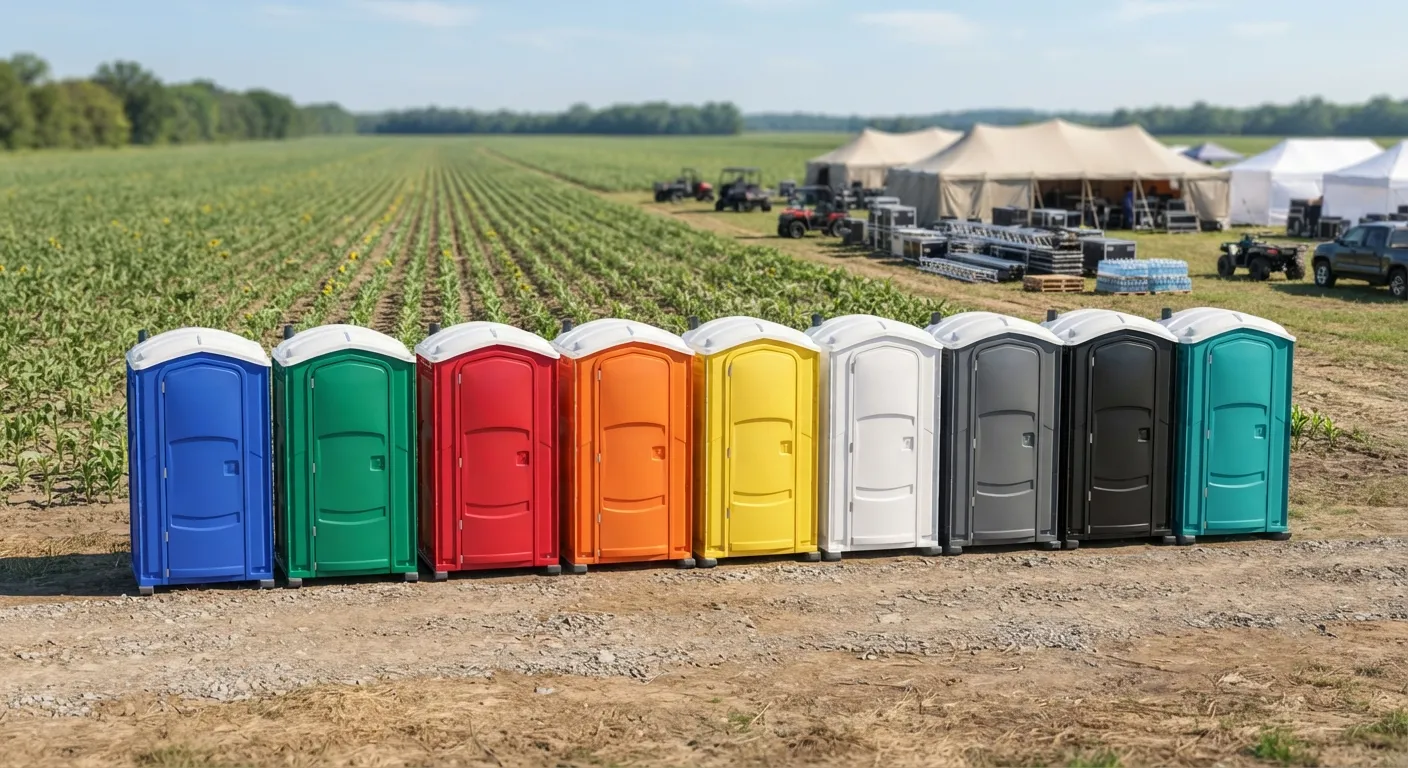
Field sanitation isn't optional once you've got hand-labor crews working rows. OSHA 1928.110 sets the baseline for agriculture: potable water, toilets and handwashing within a quarter mile walk of where people are working, at one facility per 20 employees. That quarter-mile number matters more than it sounds like it should, because a lot of Glendale operations run long rows or split fields, and a single standard porta potty rental parked at the gate doesn't cut it if your crew is a half mile out picking. Glendale Porta Pros maps unit placement against your field layout, not just your property line, so nobody's walking twenty minutes each way. For bigger seasonal crews, a portable toilet rental plan with multiple units spaced across sections beats one central bank. Ranches and dairies with a fixed labor force sometimes do better with a monthly porta potty rental rather than juggling weekly swaps, especially through a full harvest or calving cycle. If you're not sure how many units your acreage and crew size call for, the breakdown at how many porta potties do I need walks through the math, and it lines up with the same OSHA 1928.110 ratio.
What about handwashing and water on site?
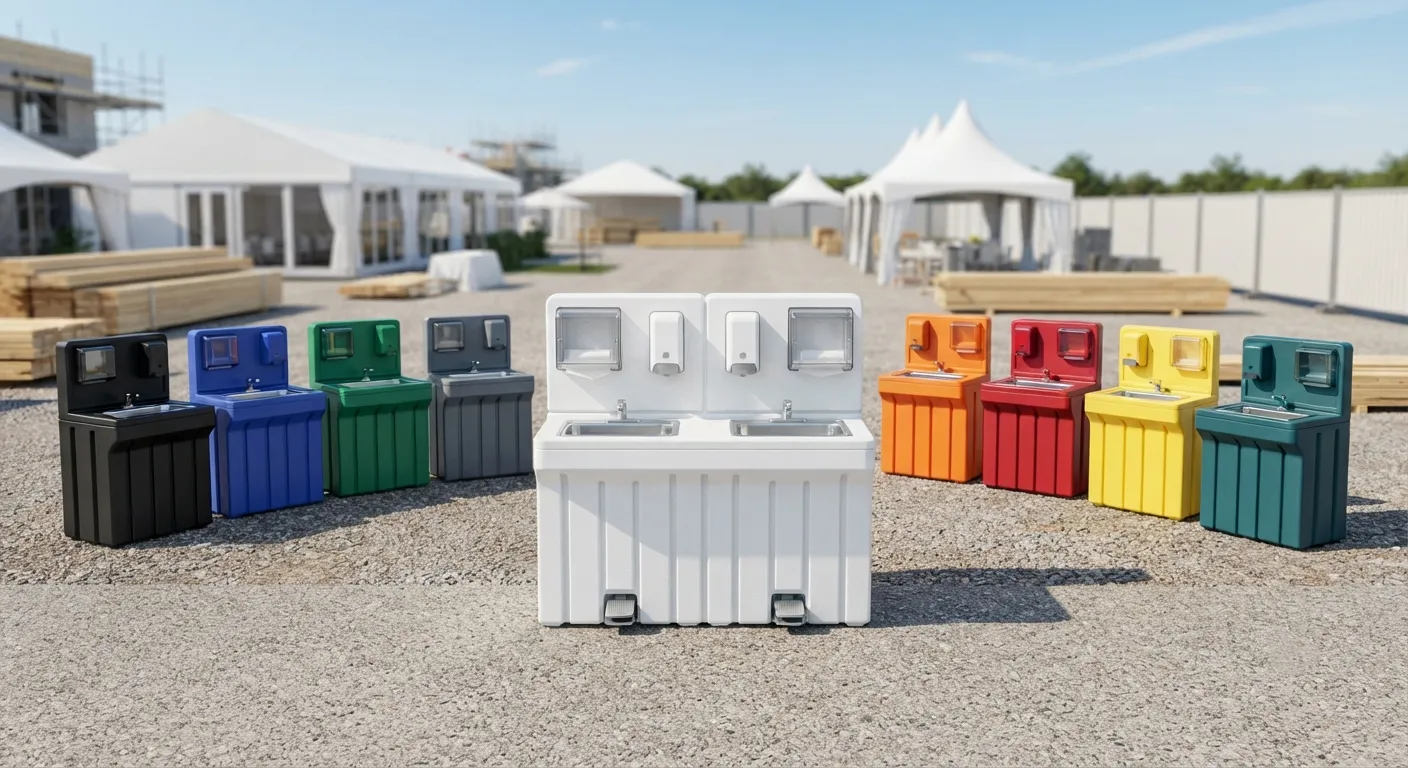
Handwashing stations aren't a nice-to-add, they're part of the same OSHA 1928.110 field sanitation rule, and 29 CFR 1910.141(d)(2) is specific that soap and towels or a hand-drying device have to be there. Hand sanitizer alone doesn't satisfy it. Glendale Porta Pros pairs every handwashing station rental with the toilet order so crews wash before breaks and lunch, not just when someone remembers to bring a bottle of gel. OSHA 1926.51(a)(1) also calls for an adequate supply of potable water at any place of employment, which matters on Glendale farm sites without a well tapped for drinking water. A portable sink rental works well at packing sheds where produce handling makes clean hands a food-safety issue, not just a labor-code one. If your crews are also using pesticides, herbicides or other chemical treatments, OSHA 1926.51(f)(1) requires washing facilities specifically because of that contaminant exposure, separate from the general field sanitation rule. Some growers add a hand sanitizer station rental as a backup near equipment sheds, but it doesn't replace the soap-and-towel setup crews need after handling chemicals or produce.
Septic service matters here too. Farmhouses and outbuildings on their own systems typically need pumping every 3 to 5 years depending on tank size and household count, and a grease interceptor at a packing or processing shed needs pumping once fats, oils, grease and solids hit 25 percent of the liquid depth. Glendale Porta Pros runs septic pumping service and grease trap pumping on the same routes as the toilet swaps, which saves a second truck trip out to rural parcels.

Where do units get placed on farm and ranch property?
Placement follows the work, not the driveway. Glendale sits inland from several smaller communities Glendale Porta Pros already services on the same delivery runs, including Sun City 9.1 miles northwest, Youngtown 9.6 miles northwest, and Tolleson 9.7 miles southwest, so a unit swap on a Glendale property often shares a route with a stop in one of those towns. That matters for response time when a unit needs emergency service mid-harvest. A roll-off delivery still needs about 60 feet of straight clearance behind the truck, which is easy on most farm access roads but worth checking near equipment barns or narrow field gates before delivery day. For ADA compliance where you've got office staff, visiting inspectors, or public-facing agritourism operations, ADA Standards section 213.2 requires that at least 5 percent of a cluster of single-user units be accessible, never fewer than one, and an ADA accessible porta potty unit needs a 60 inch turning circle inside per ADA Standards section 304.3.1. Farm stands or U-pick operations open to the public should plan for that from the start rather than adding it after a complaint.
For debris from field clearing, fence replacement or shed teardown, a roll-off dumpster rental or a construction dumpster rental handles the cleanup side, and temporary fence rental keeps livestock or equipment areas boxed off from crew parking. Operations running a hand-labor season that spans months sometimes add a storage container rental for tools and chemical storage rather than hauling gear back and forth daily.
How often do farm restrooms get serviced?
Weekly is the baseline. ANSI/PSAI Z4.3 sets one service visit per week for up to 10 users over a 40 hour week as the standard interval, but heavier crews or hot-season use often need twice-weekly service. Glendale Porta Pros adjusts the schedule once you know your crew count.
Can I rent just one unit for a small family farm?
Yes. A single standard porta potty rental covers small operations under the 20-worker OSHA 1928.110 threshold. Weekly and monthly terms both work, and delivery follows the same routes serving Glendale properties and nearby growing areas.
Do I need handwashing stations separate from the toilets?
Yes, under 29 CFR 1910.141(d)(2) and OSHA 1928.110, handwashing needs soap and towels or a dryer, not just sanitizer. Glendale Porta Pros bundles a handwashing unit with toilet delivery so both show up together.
What if my fields are spread across a large property?
Multiple units beat one central bank. OSHA 1928.110's quarter-mile walk limit means far-flung fields need their own toilet and handwashing setup rather than one unit at the entrance gate.
Does a packing shed need different service than a field toilet?
Packing sheds often need a grease interceptor serviced once it hits 25 percent solids, plus a portable sink for produce handling. Field units focus on toilet and handwashing access under OSHA 1928.110 instead.
Next step
Get a delivery date
Tell us the address, the dates and the headcount. We size the order and confirm the route.