What Makes a Porta Potty ADA Accessible?
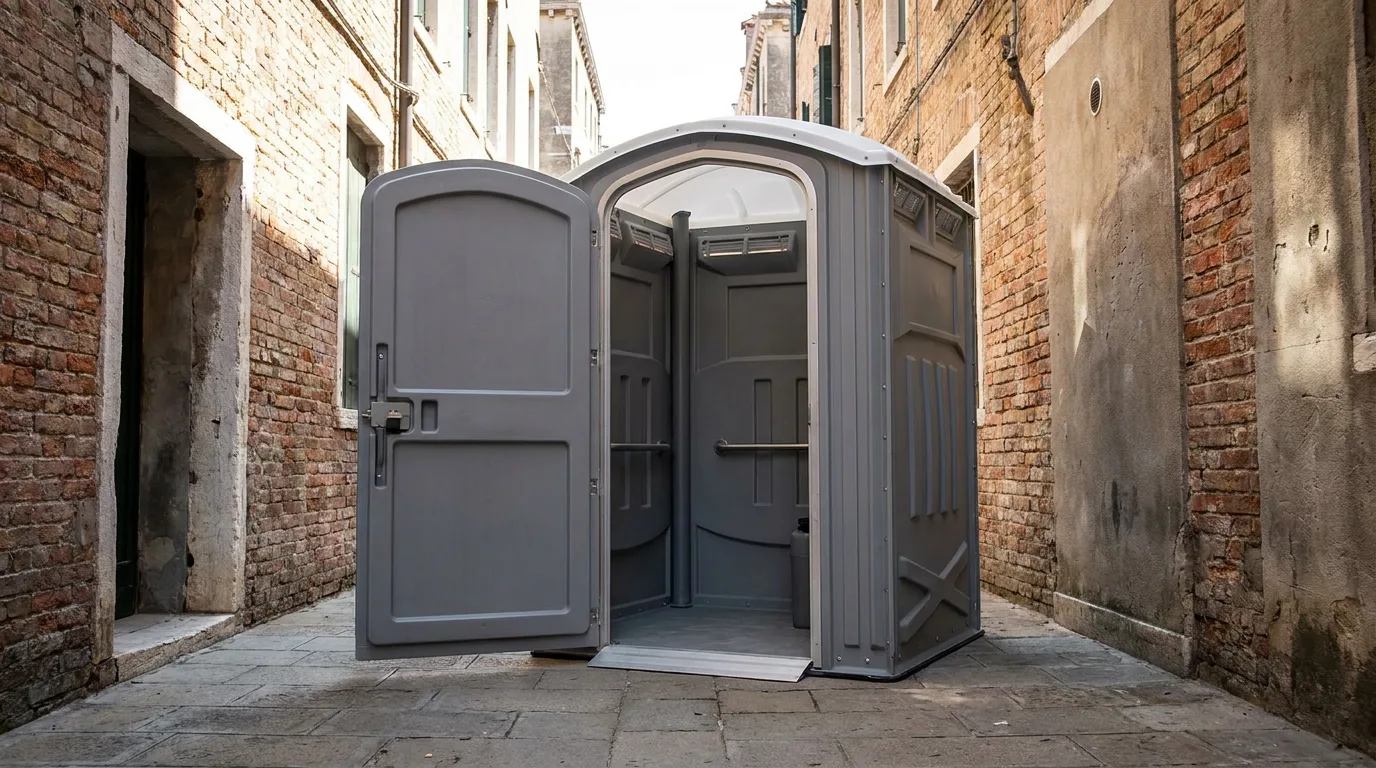
An accessible unit is built around clearance, not just size. ADA Standards section 404.2.3 sets a minimum clear door opening of 32 inches, and section 403.5.1 requires a 36 inch clear width on the route leading up to it. Inside, section 304.3.1 calls for a 60 inch turning circle so a wheelchair user can maneuver without backing out the door. Section 308.2.1 limits reach ranges to 48 inches high and 15 inches low, and section 309.4 says grab bars and latches need to operate with one hand and no more than 5 pounds of force. Standard units on a Glendale job site run about 44 by 48 inches on the ground and 92 inches tall, which is why an ADA accessible porta potty is a different footprint entirely, not just a standard unit with a bar bolted in. Section 302.1 also requires the ground surface under and around the unit to be stable, firm and slip resistant, which matters on gravel lots and unfinished construction pads around Glendale. If you are placing units for a wedding or event, check the porta potty placement guide before you set the pad.
How Many ADA Units Do I Need in Glendale?
The 5 percent rule from ADA Standards section 213.2 sets the floor: if you have 20 standard units, at least one must be accessible. Most Glendale sites with fewer than 20 units still need one accessible unit, because the standard never drops below one no matter how small the cluster. This runs alongside OSHA 1926.51(c)(1), which sets separate worker-count ratios for construction sites: one toilet for 20 workers or fewer, one toilet and one urinal per 40 workers above that, and one per 50 once you pass 200 workers. Those two rules solve different problems. OSHA is about capacity, ADA is about access, and a Glendale contractor needs to satisfy both. For a full breakdown of worker ratios, see OSHA portable toilet requirements, and for general headcount planning use how many porta potties do I need. Event organizers running a wedding restroom rental or festival restroom rental in Glendale should apply the same 5 percent floor across their whole cluster, not per row or per tent.

What Does an ADA Restroom Trailer Need?
A restroom trailer scales the same standards up. Ramps into an accessible trailer unit cannot exceed a 1:12 running slope under ADA Standards section 405.2, which is why accessible trailers often need more setup room than a standard unit dropped at curbside. The 36 inch route width and 32 inch door clearance still apply once you are inside, and the 60 inch turning circle still governs the stall itself. If you are weighing a restroom trailer rental against standard units for a Glendale event, the trailer route usually makes more sense for larger guest counts because it consolidates accessible stalls into fewer structures. A 2 stall restroom trailer or 4 stall restroom trailer can each include a compliant stall without needing a separate standalone unit nearby. Check restroom trailer rental cost before locking in a stall count, since accessible stalls inside a trailer are usually built in rather than added later. For larger festivals or fairgrounds work, an 8 stall restroom trailer spreads the requirement across more traffic without multiplying delivery footprints.
Where Do ADA Units Go on a Glendale Site?
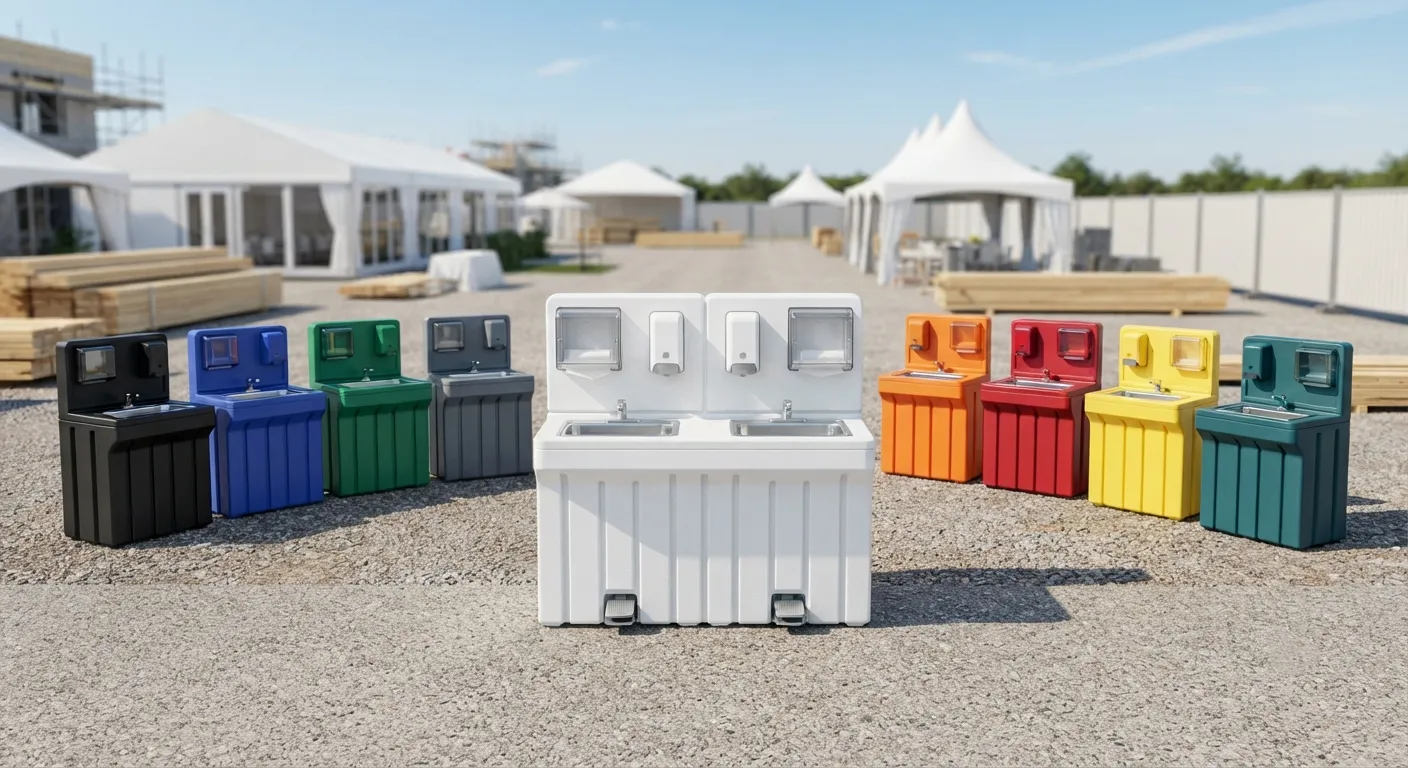
Placement decides whether an accessible unit actually works, not just whether it exists. The 36 inch clear route in ADA Standards section 403.5.1 has to run from parking or the public path all the way to the unit door, over ground that meets the slip-resistant standard in section 302.1. On a construction site, that route needs to stay clear of the debris and scrap that OSHA 1926.25 requires crews to keep out of work areas, and clear of any barricades set under OSHA 1926.202. Glendale sites near Sun City, roughly 9.1 miles northwest, or Tolleson, about 9.7 miles southwest, often deliver several units at once, so mapping the accessible route before trucks arrive saves a second trip. If your event needs handwashing alongside the restroom cluster, a handwashing station rental should sit on the same accessible route, not off to the side. For active work zones, pair route planning with temporary fence rental so pedestrian paths stay separated from vehicle traffic. Contractors coordinating a larger buildout should also review construction site services for how accessible sanitation fits into the rest of the site layout.
Frequently Asked Questions
Does every portable toilet cluster in Glendale need an accessible unit?
Yes, if units are clustered together. ADA Standards section 213.2 requires at least 5 percent accessible, and never fewer than one, regardless of cluster size. A single standalone unit at a small residential job may not trigger the rule the same way a multi-unit event site does. Check porta potty permit requirements for placement specifics.
Is an ADA unit more expensive than a standard rental in Glendale?
Yes, typically. ADA units run higher than standard units at the same duration because of the added size and hardware. See porta potty rental cost for how accessible pricing compares across day, week and month terms before you request a quote.
Can I mix ADA and standard units on the same Glendale site?
Yes, that is the normal setup. Most sites use mostly standard units with the required accessible percentage mixed in. Review standard porta potty rental alongside the ADA option so your cluster count and accessible ratio line up correctly from the start.
Do OSHA and ADA restroom rules overlap in Glendale?
They apply together but solve different problems. OSHA 1926.51(c)(1) sets worker-to-toilet ratios; ADA Standards section 213.2 sets the accessible-unit ratio within whatever total you land on. A Glendale contractor needs to satisfy both counts, not just the larger one.
What if my Glendale event only needs one restroom unit?
A single unit still needs to meet the accessible minimum since the ADA floor never drops below one accessible unit. For small events, request an ADA accessible porta potty directly rather than a standard unit, since there is no cluster to average against.
Next step
Get a delivery date
Tell us the address, the dates and the headcount. We size the order and confirm the route.